When the Thieves Write the Ledger: Why the Philippines Must Break the Status Quo
The Philippine Congress has just passed its record-high ₱6.793 trillion national budget for 2026 — the largest in the nation’s history. Heralded as a “budget for prosperity,” it now moves to the Senate, the bicameral conference committee, and finally to the President’s desk for signature.
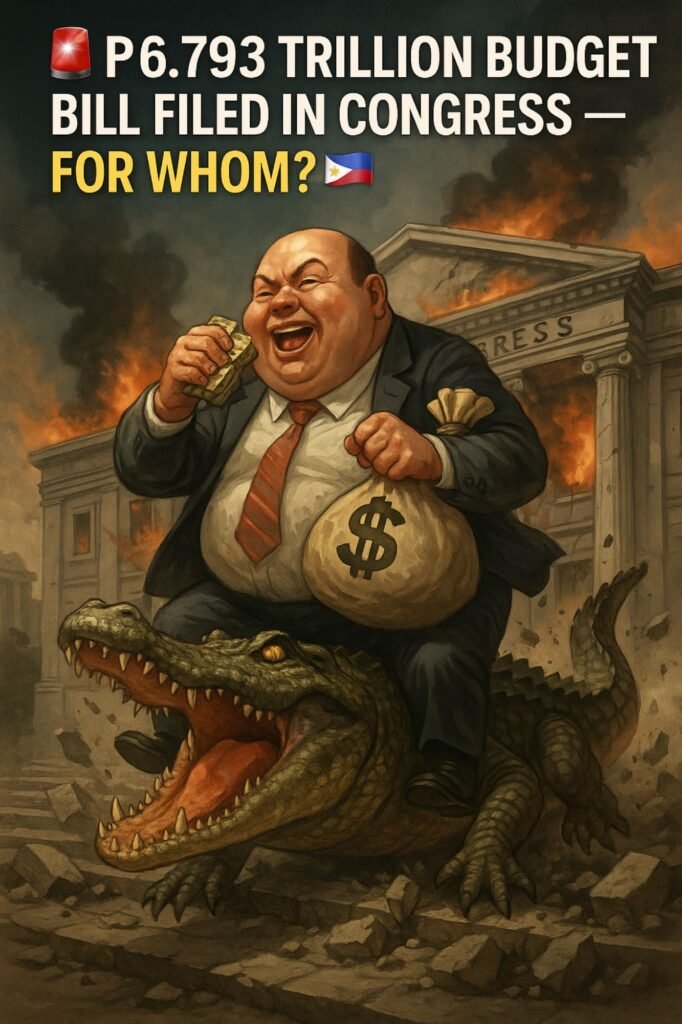
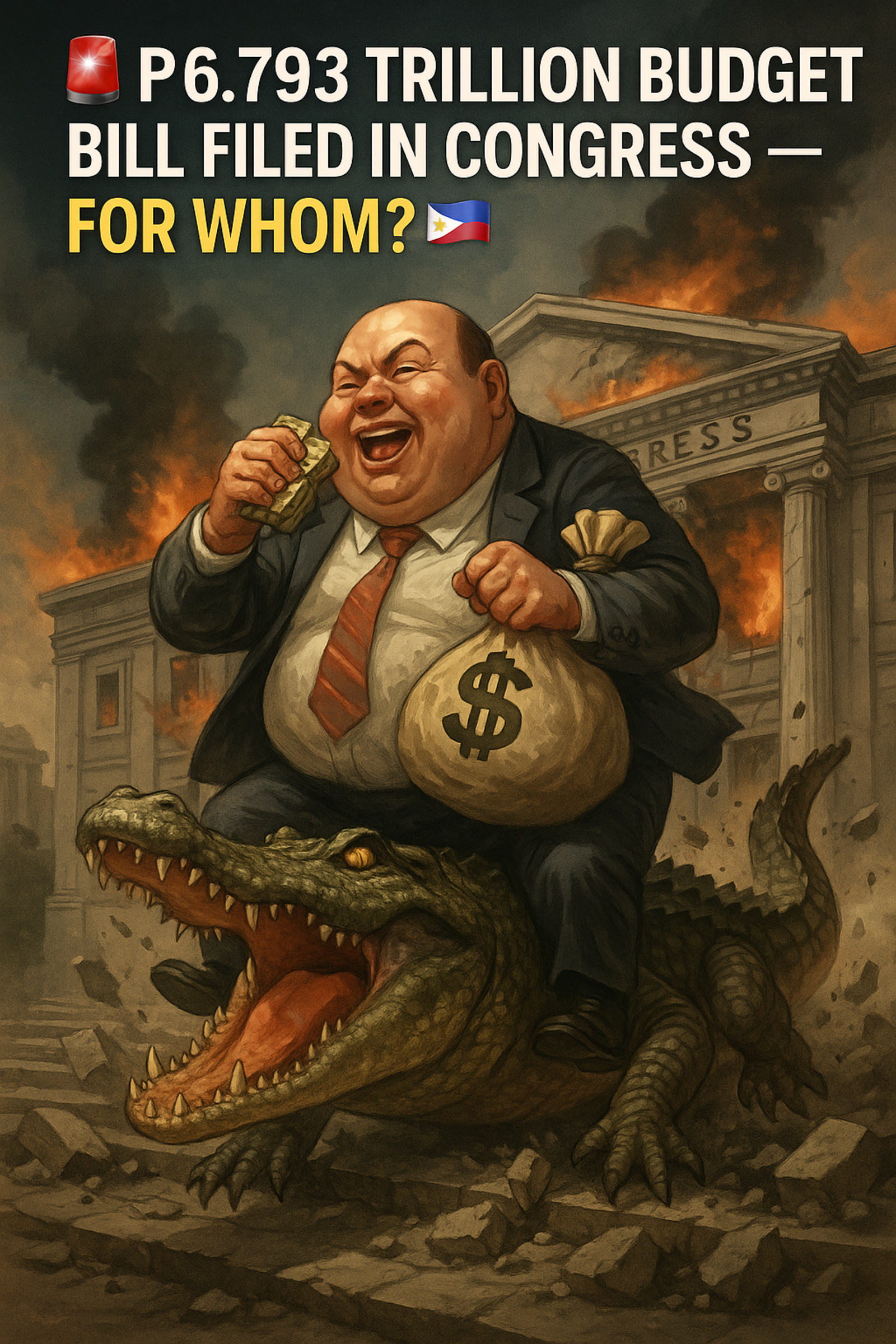
But behind this unprecedented figure lies an uncomfortable truth: a system built on self-interest and impunity, where lawmakers craft the very budget they later benefit from. It is, in essence, a budget made by congressmen — and too often, stolen by congressmen.
The Price of Corruption: Trillions Lost, Millions Left Behind
According to the Philippine Institute for Development Studies (PIDS) and various watchdogs, the country loses at least ₱700 billion to ₱1.4 trillion annually to corruption across all levels of government — from procurement and ghost projects to bribery, smuggling, and political patronage. Over the last decade, that translates to trillions siphoned off, enough to build thousands of schools, hospitals, and flood control systems the nation still lacks.
Transparency International’s 2024 Corruption Perceptions Index ranks the Philippines 114th out of 180 countries, with a score of 33 out of 100 — placing it among the most corrupt nations in Asia. It’s a damning reflection of how deep the rot runs in the bureaucracy and the political class.
A Nation Rich in Resources, Poor by Design
The Philippines is not poor because it lacks wealth. It is poor because its wealth is stolen, wasted, or misused. Every peso diverted to corruption is a meal lost for a hungry child, a bridge left unbuilt, or a hospital that never opens.
While the government boasts of economic growth, inequality deepens. The ₱6.793 trillion budget — nearly one-fourth of the country’s GDP — could have been a lifeline. Instead, it risks becoming another cycle of political patronage, “insertions,” and pork-barrel corruption hidden under the guise of public service.
Why Dissolving Congress Makes Sense
Calls are growing louder for radical reform — even dissolving Congress temporarily to allow a civilian-military transition government tasked with cleansing the system. The logic is simple: you cannot expect thieves to investigate themselves.
A one-year transition could convene a constitutional convention to shift toward a parliamentary system — one that reduces the number of legislators, regionalizes the election of senators, and decentralizes power away from Manila’s political dynasties. Under such a system, every region would have its own senator, ensuring fairer representation and accountability.
Breaking the Cycle
- Conflict of Interest – Congress cannot continue to write and police its own budget.
- Entrenched Corruption – Patronage politics and discretionary funds ensure loyalty, not transparency.
- Unequal Representation – The Senate remains dominated by Luzon-based elites, marginalizing Visayas and Mindanao.
- Weak Oversight – Investigations stall because they implicate those conducting them.
Without structural reform, the Philippines will keep walking in circles — richer budgets, poorer people, and deeper cynicism.
The Crossroads
The ₱6.793 trillion budget should have symbolized progress. Instead, it stands as a mirror to the country’s moral crisis — a nation bleeding money, yet starving its own people.
The time has come for a reset, not a revision. For a government that serves the governed, not itself. Because as long as the same people write the laws, approve the funds, and profit from their misuse, the Philippines will remain a nation with trillion-peso budgets — and trillion-peso corruption losses.